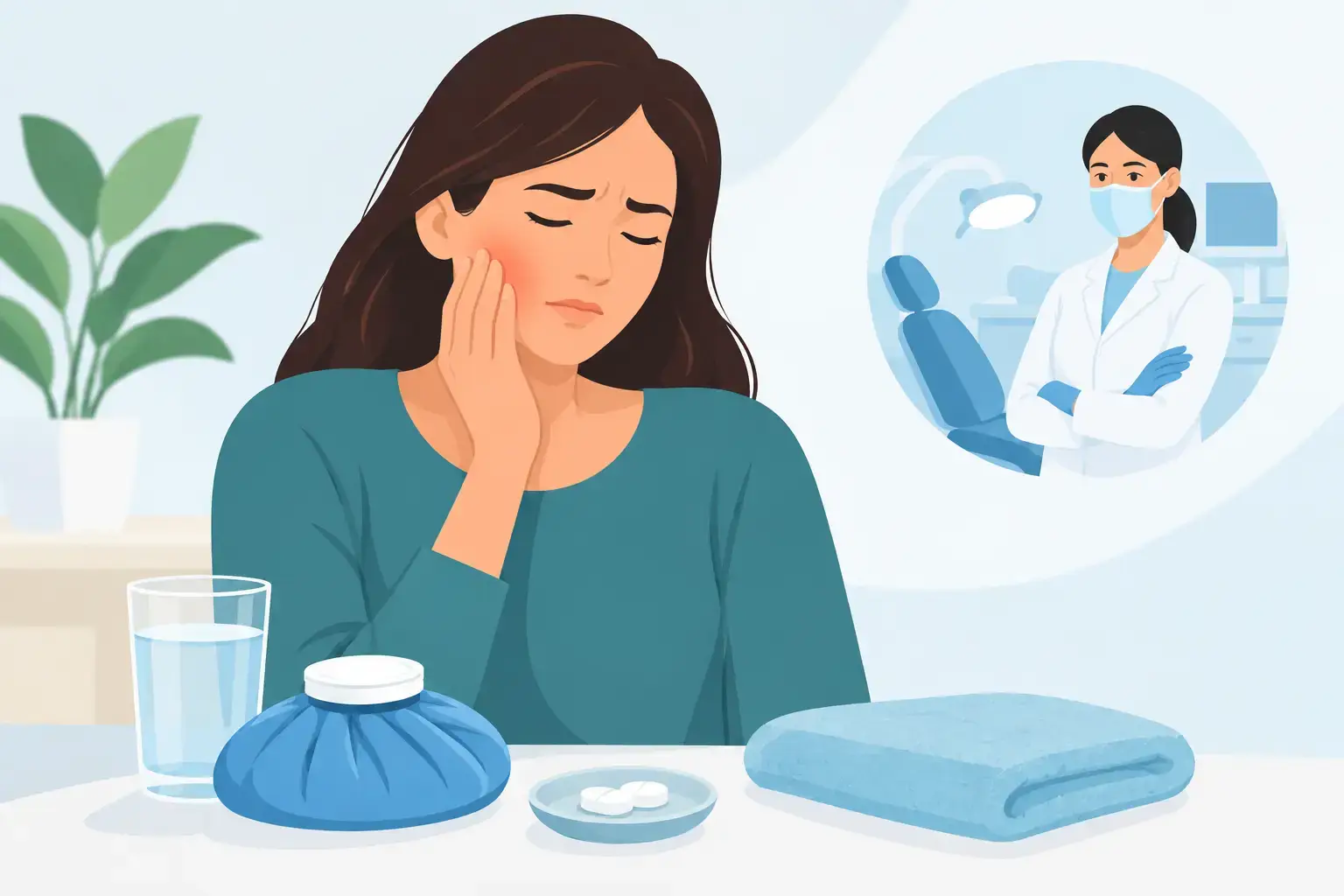
A toothache can make a normal workday, family meal, or night of sleep feel impossible. While toothache relief can help you feel more comfortable for a few hours, pain is your body’s signal that something needs attention. The most effective way to protect your comfort and your smile is to manage symptoms safely, then arrange a dental examination as soon as possible.
Toothache Relief Starts With Finding the Cause
Tooth pain is not a diagnosis. It can feel sharp, throbbing, dull, or sensitive to hot and cold, and the sensation may come from a number of dental concerns. A cavity, cracked tooth, loose filling, gum infection, food trapped between teeth, sinus pressure, or an infected tooth nerve can all cause discomfort.
The pattern of pain can offer useful clues. Sensitivity that disappears quickly after cold food may point to early enamel wear or a small cavity. Pain that lingers after hot or cold drinks, wakes you at night, or pulses on its own can indicate deeper inflammation inside the tooth. Swelling, a bad taste, or pain when biting deserves prompt care because it may be related to an infection or crack.
Home care cannot repair decay, seal a fracture, or remove an infection. It can, however, give you a safer bridge to professional treatment and prevent the problem from becoming more difficult to treat.
Safe Ways to Get Temporary Toothache Relief
Rinse and clean gently
Start by rinsing your mouth with warm water. If food may be caught around the painful tooth, gently floss between the teeth. Even a small piece of food lodged near the gumline can create surprising pressure and soreness.
A warm saltwater rinse may also soothe irritated gum tissue. Mix about half a teaspoon of salt into a glass of warm water, swish gently, and spit it out. Do not swallow the rinse. This is especially helpful when the gums feel tender, but it is not a substitute for treatment if swelling or severe pain is present.
Use pain medicine carefully
Over-the-counter pain relievers can be helpful when used exactly as directed on the package. Ibuprofen may reduce pain and inflammation for many adults, while acetaminophen can be an option for people who cannot take anti-inflammatory medication. Some people should avoid one or both medicines because of medical conditions, pregnancy, allergies, blood-thinning medication, or other prescriptions.
If you are unsure what is safe for you, ask a pharmacist, physician, or dentist before taking anything. Never exceed the labeled dose, and do not give adult medication to a child without guidance based on the child’s age and weight.
Apply a cold compress for swelling
If your cheek or jaw feels swollen, hold a cold pack wrapped in a thin towel against the outside of your face for 15 to 20 minutes at a time. The cold can reduce swelling and temporarily numb the area. Avoid placing ice directly on the tooth or gums, as extreme cold can make sensitivity worse.
Choose foods that will not aggravate the tooth
Until you are seen, chew on the other side of your mouth and choose soft foods at a mild temperature. Very hot, very cold, sugary, crunchy, or sticky foods can trigger a painful tooth and may pull on a loose filling or crown. Keeping the area clean after eating is equally important.
What Not to Do for a Toothache
A few common home remedies can cause more harm than relief. Do not place aspirin, alcohol, or crushed pain medicine directly on the gums or tooth. These substances can burn soft tissue and do not treat the source of pain.
Avoid using a sharp object to dig around a sore tooth, trying to glue a broken restoration back in place, or applying heat to facial swelling. Heat may worsen swelling when infection is involved. Antibiotics should only be taken when prescribed by a qualified clinician for your specific condition. Leftover antibiotics may be the wrong type, dose, or duration, and they cannot fix a tooth that needs a filling, root canal treatment, or drainage.
If a filling or crown comes loose, keep it if you can find it and bring it to your appointment. A dental team can assess whether it can be reattached or whether a new restoration is needed.
When a Toothache Needs Urgent Dental Care
A mild ache that goes away may still need an examination, particularly if it returns. But certain symptoms should move dental care to the top of your schedule. Contact a dental office promptly if you have severe pain, visible facial or gum swelling, a fever, pus or drainage, a persistent bad taste, pain that prevents sleep, or a tooth that feels loose after an injury.
Seek emergency medical help immediately if swelling is spreading toward the eye, jaw, or neck, or if you have trouble breathing, swallowing, or opening your mouth. These can be signs of a serious infection that requires urgent medical attention.
For children, do not assume a painful baby tooth can wait because it will eventually fall out. Pain, swelling, or sensitivity can affect eating, sleep, school, and the health of the developing permanent teeth. Gentle, timely care helps children feel secure while protecting their oral health.
How a Dentist Provides Lasting Relief
A dental visit focuses on the reason for the pain, not just the symptom. Your dentist will ask when the discomfort began, what triggers it, and whether it is constant or intermittent. An examination and dental X-rays may be used to look beneath the surface for decay, infection, bone changes, cracks, or problems around an existing restoration.
Treatment depends on what is found. Early decay may only need a filling. A damaged or weakened tooth may benefit from a crown. If bacteria have reached the inner pulp of the tooth, root canal treatment can remove the infection and preserve the natural tooth. Gum treatment, bite adjustment, or replacing a failing filling may be the right solution in other cases.
Many people delay care because they are worried that treatment will hurt. In reality, treating the cause of pain is often the fastest route back to comfort. Modern local anesthetic, digital imaging, and a calm, step-by-step approach can make even urgent care feel far more manageable than expected.
Preventing the Next Toothache
Not every toothache is preventable, especially after an accident or unexpected crack. Still, routine preventive care catches many problems when they are smaller, simpler, and more comfortable to treat. Brushing twice daily with fluoride toothpaste, cleaning between teeth every day, limiting frequent sugary snacks and drinks, and wearing a nightguard if you grind your teeth can all reduce risk.
Regular checkups also matter when your teeth feel fine. Cavities and small cracks can develop quietly before they become painful. A dentist can monitor older fillings, crowns, and gum health before a minor concern turns into an emergency visit.
At Bright Smile Medical Center, the goal is to make that next step feel reassuring: careful diagnosis, clear options, and treatment designed around your comfort. If tooth pain is interrupting your life, do not wait for it to become unbearable. A timely dental visit can replace uncertainty with relief and help you get back to smiling, eating, and sleeping comfortably.
Need Help?
Schedule your initial consultation today and start your journey towards a pain-free, healthier smile. Contact us now!
var elementorFrontendConfig = {"environmentMode":{"edit":false,"wpPreview":false,"isScriptDebug":false},"i18n":{"shareOnFacebook":"Share on Facebook","shareOnTwitter":"Share on Twitter","pinIt":"Pin it","download":"Download","downloadImage":"Download image","fullscreen":"Fullscreen","zoom":"Zoom","share":"Share","playVideo":"Play Video","previous":"Previous","next":"Next","close":"Close","a11yCarouselPrevSlideMessage":"Previous slide","a11yCarouselNextSlideMessage":"Next slide","a11yCarouselFirstSlideMessage":"This is the first slide","a11yCarouselLastSlideMessage":"This is the last slide","a11yCarouselPaginationBulletMessage":"Go to slide"},"is_rtl":false,"breakpoints":{"xs":0,"sm":480,"md":768,"lg":1025,"xl":1440,"xxl":1600},"responsive":{"breakpoints":{"mobile":{"label":"Mobile Portrait","value":767,"default_value":767,"direction":"max","is_enabled":true},"mobile_extra":{"label":"Mobile Landscape","value":880,"default_value":880,"direction":"max","is_enabled":false},"tablet":{"label":"Tablet Portrait","value":1024,"default_value":1024,"direction":"max","is_enabled":true},"tablet_extra":{"label":"Tablet Landscape","value":1200,"default_value":1200,"direction":"max","is_enabled":false},"laptop":{"label":"Laptop","value":1366,"default_value":1366,"direction":"max","is_enabled":false},"widescreen":{"label":"Widescreen","value":2400,"default_value":2400,"direction":"min","is_enabled":false}},"hasCustomBreakpoints":false},"version":"4.1.1","is_static":false,"experimentalFeatures":{"e_font_icon_svg":true,"additional_custom_breakpoints":true,"container":true,"theme_builder_v2":true,"hello-theme-header-footer":true,"nested-elements":true,"global_classes_should_enforce_capabilities":true,"e_variables":true,"e_opt_in_v4_page":true,"e_components":true,"e_interactions":true,"e_widget_creation":true,"import-export-customization":true,"e_pro_variables":true},"urls":{"assets":"https:\/\/brightsmileshj.com\/wp-content\/plugins\/elementor\/assets\/","ajaxurl":"https:\/\/brightsmileshj.com\/wp-admin\/admin-ajax.php","uploadUrl":"https:\/\/brightsmileshj.com\/wp-content\/uploads"},"nonces":{"floatingButtonsClickTracking":"7b3529b3c2","atomicFormsSendForm":"5de975de24"},"swiperClass":"swiper","settings":{"page":[],"editorPreferences":[]},"kit":{"active_breakpoints":["viewport_mobile","viewport_tablet"],"global_image_lightbox":"yes","lightbox_enable_counter":"yes","lightbox_enable_fullscreen":"yes","lightbox_enable_zoom":"yes","lightbox_enable_share":"yes","lightbox_title_src":"title","lightbox_description_src":"description"},"post":{"id":2688,"title":"Toothache%20Relief%20That%20Helps%20Until%20You%E2%80%99re%20Seen%20-%20Bright%20Smile%20Medical%20Center%20%7C%20Dental%20Clinic%20In%20Sharjah","excerpt":"Get toothache relief with safe home care tips, warning signs, and clear guidance on when urgent dental treatment is needed to save your smile and health.","featuredImage":"https:\/\/brightsmileshj.com\/wp-content\/uploads\/2026\/11\/toothache-relief-that-helps-until-youre-seen-featured-1024x683.webp"}};
//# sourceURL=elementor-frontend-js-before