
Replacing a missing tooth is not just about filling a gap. It affects how you chew, how your smile looks, and how confident you feel when speaking or laughing. When patients ask about dental implants vs bridges, they are usually trying to answer a very practical question: which option will feel better, last longer, and make the most sense for their health and budget?
The honest answer is that both treatments can work very well. The better choice depends on your bone support, the condition of nearby teeth, your timeline, and what matters most to you over the long term. A good consultation should not push one solution for everyone. It should help you understand the trade-offs clearly.
Dental implants vs bridges: the core difference
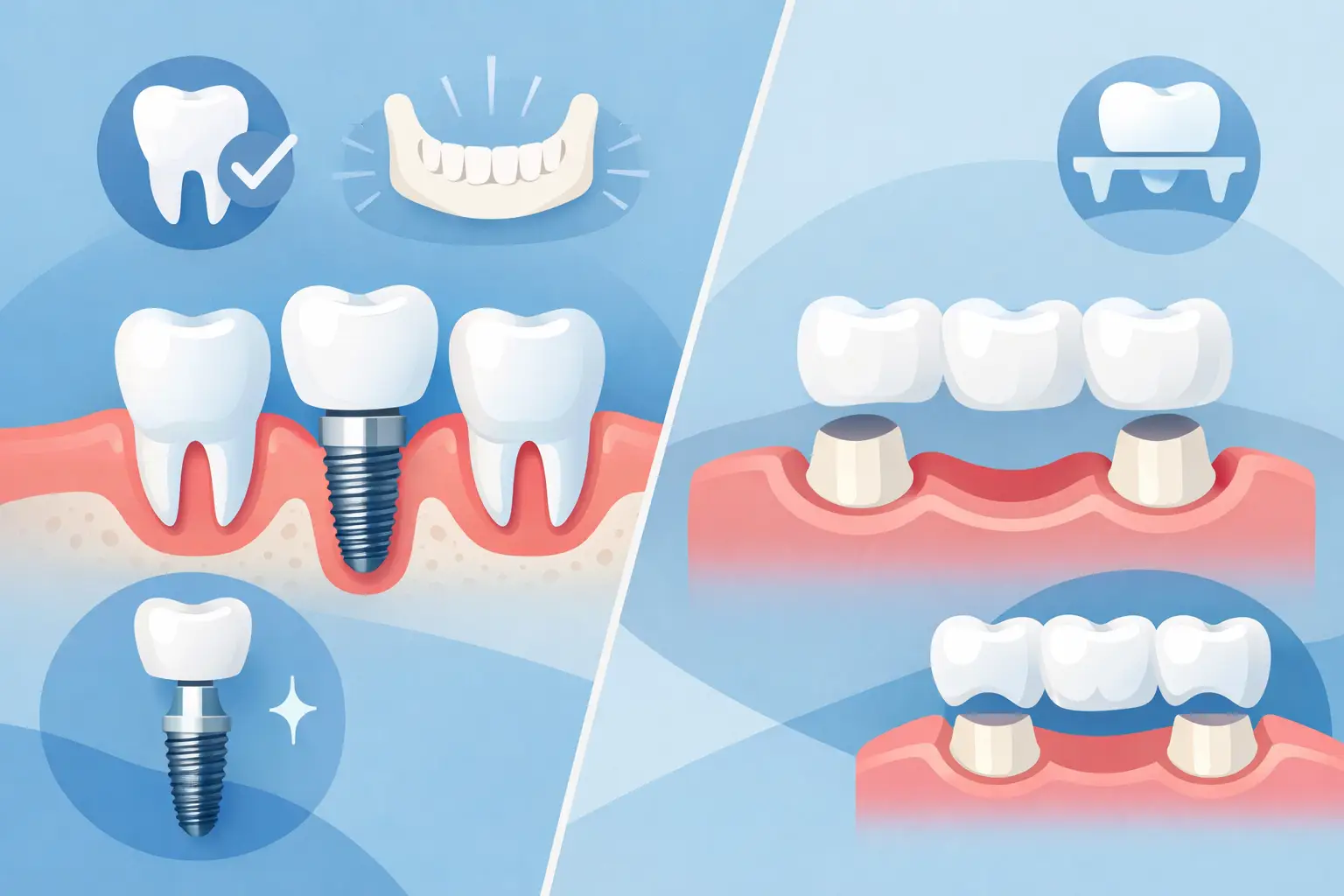
A dental bridge replaces a missing tooth by using the teeth on either side for support. Those neighboring teeth are usually prepared for crowns, and the false tooth sits between them. The bridge spans the empty space, which is where the name comes from.
A dental implant works differently. Instead of relying on nearby teeth, it replaces the root of the missing tooth with a titanium post placed in the jawbone. After healing, a crown is attached on top. The result is a replacement tooth that stands on its own.
That one difference changes a lot. A bridge depends on adjacent teeth. An implant depends on bone and healing. Neither is automatically better in every case, but they solve the problem in very different ways.
When a dental bridge may be the better choice
Bridges are often a strong option when you want a faster treatment process or when the teeth next to the gap already need crowns. In that situation, a bridge can restore the area efficiently without adding a surgical procedure.
For some patients, this makes the decision straightforward. If the neighboring teeth are heavily filled, cracked, or already crowned, using them to support a bridge may be clinically sensible. It can combine restoration and tooth replacement in one treatment plan.
Bridges can also be suitable for patients who are not ideal candidates for implant surgery. That may include people with insufficient bone, certain medical conditions, or those who prefer to avoid surgery altogether. A bridge is still a fixed, natural-looking solution, and for many people, it restores function and appearance very successfully.
Another advantage is timing. In many cases, a bridge can be completed more quickly than an implant, because implants require healing time after placement. If you are balancing work, family responsibilities, or an upcoming event, that shorter timeline can matter.
When a dental implant may be the better choice
Implants are often the preferred option when the goal is to replace a missing tooth without affecting the healthy teeth beside it. Because the implant stands independently, there is no need to reshape adjacent teeth just to support the restoration.
That can be a major long-term advantage. Preserving natural tooth structure is always valuable when possible. If the teeth next to the space are healthy and untouched, many dentists see that as a strong reason to consider an implant.
Implants also help stimulate the jawbone. When a tooth is lost, the bone in that area no longer receives the same pressure from chewing, so it can begin to shrink over time. A bridge restores the visible part of the tooth, but it does not replace the root. An implant does. That means it can support bone health in a way a bridge cannot.
Many patients also describe implants as feeling more like natural teeth once treatment is complete. They are fixed, stable, and easy to care for with normal brushing and flossing techniques tailored to the area. For someone looking for a durable, long-range solution, that matters.
Appearance, comfort, and daily function
Both bridges and implants can look excellent when properly designed. Modern dental materials allow restorations to blend naturally with surrounding teeth, so from a cosmetic standpoint, either option can produce a beautiful result.
Comfort is more personal. A bridge may feel very natural quickly because it is fixed in place and does not involve a healing implant site. An implant, however, often feels more like an individual tooth once fully integrated, especially when biting and chewing.
Function matters just as much as appearance. If the bite is carefully planned, both options can restore chewing ability well. Still, implants usually distribute biting force more independently, while bridges share forces across supporting teeth. That does not make bridges weak, but it does mean the supporting teeth take on extra work.
Cost now versus value over time
For many patients, this is where the conversation gets real. A bridge often has a lower upfront cost than an implant. That can make it more accessible in the short term, especially if treatment needs to happen soon.
An implant usually costs more initially because it involves surgery, healing, and multiple stages. But the long-term value may be better in the right case, especially if it lasts many years and helps preserve nearby teeth and bone.
This is why the cheapest option is not always the most economical, and the most advanced option is not always the smartest choice either. A patient who needs a quick, effective restoration and already has compromised neighboring teeth may get excellent value from a bridge. A patient with healthy adjacent teeth and good bone may see stronger long-term value in an implant.
Longevity and maintenance
Implants are often known for longevity. With good oral hygiene, healthy gums, and regular dental care, they can last for many years. That said, they are not maintenance-free. Gum health around implants still matters, and habits like smoking or teeth grinding can affect outcomes.
Bridges can also last a long time, especially when they are well made and well maintained. However, because they involve multiple connected units and rely on supporting teeth, there are more variables. If one supporting tooth develops decay or a problem under a crown, the whole bridge may be affected.
Cleaning is slightly different too. Bridges require extra attention underneath the artificial tooth, often using floss threaders or other cleaning aids. Implants are generally easier to clean like individual teeth, though patients still need proper instruction to keep the gums healthy.
Dental implants vs bridges for different patient situations
If you are missing one tooth and the neighboring teeth are healthy, an implant often has the edge because it preserves those teeth. If the neighboring teeth already need significant restoration, a bridge may make more practical sense.
If speed matters, bridges often win. If preserving bone matters most, implants usually have the advantage. If surgery feels like a barrier, bridges may feel more comfortable as a treatment path. If you are thinking 10 to 20 years ahead, implants are often worth serious consideration.
Age alone does not decide this. We see younger adults choose implants because they want to protect healthy surrounding teeth, and older adults choose implants because they want fixed, stable function. We also see many patients choose bridges for sound reasons related to health, timing, or cost.
What your dentist should evaluate before recommending either option
This decision should never be made from photos alone. A proper assessment includes the health of the gums, the strength of the surrounding teeth, the amount of available bone, your bite pattern, and your overall medical history.
Aesthetic goals matter too. The front teeth have different cosmetic demands than back teeth. Your smile line, gum shape, and the visibility of the area all influence planning. So does your daily routine. Some patients want the most conservative option for natural teeth. Others want the shortest path to a stable result.
At a comprehensive clinic like Bright Smile Medical Center, this kind of treatment planning is especially helpful because restorative, surgical, and cosmetic considerations can be looked at together rather than in isolation.
So which one fits best?
If you want the shortest answer, dental implants are often the more conservative long-term option for a single missing tooth when bone and health conditions are favorable. Bridges remain an excellent treatment when adjacent teeth need crowns, surgery is not ideal, or a faster solution is needed.
The best choice is the one that fits your mouth, your priorities, and your future plans. A replacement tooth should do more than fill space. It should feel stable, look natural, and support your confidence every day.
The most helpful next step is not guessing from general advice online. It is getting a personalized evaluation so you can choose with clarity, not pressure.