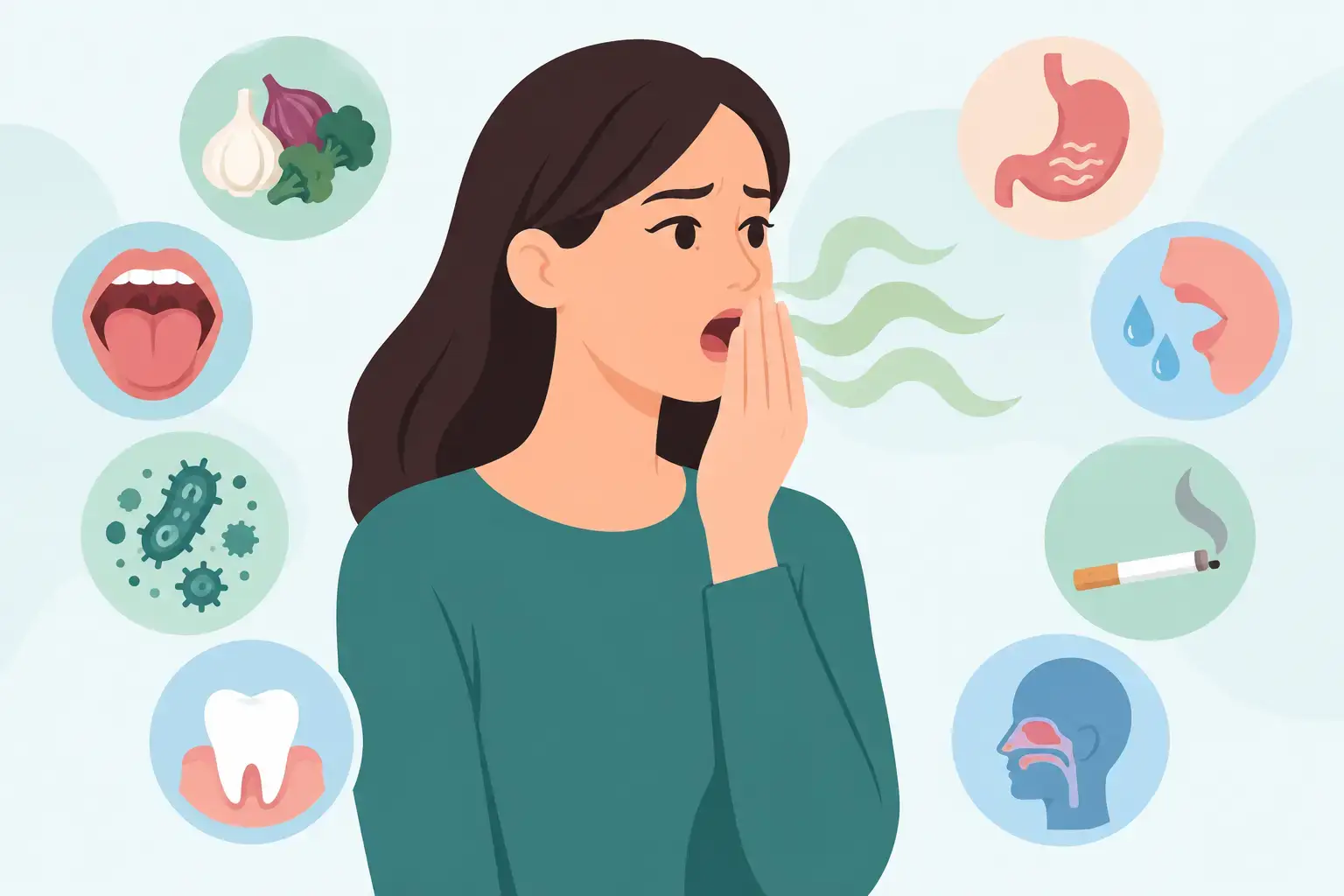
A clean mouth can still develop an unpleasant odor by the end of a long day, after coffee, or when you wake up. But what causes bad breath is not always as simple as the last meal you ate. Persistent bad breath, also called halitosis, often starts with bacteria in the mouth, although dry mouth, gum problems, tooth decay, and some health conditions can also contribute.
The reassuring news is that most cases can be identified and improved with the right care. Rather than masking the odor with mints or mouthwash, it helps to find the source. That is where a dental examination can make a real difference.
What Causes Bad Breath Most Often?
Bad breath occurs when odor-producing bacteria break down food particles, dead cells, and proteins in the mouth. In the process, they release sulfur compounds with a strong, unpleasant smell. Everyone has these bacteria to some degree, but they multiply more easily when plaque, food debris, or dry mouth are present.
1. Plaque Buildup and Incomplete Cleaning
Plaque is a sticky film of bacteria that collects on teeth and along the gumline throughout the day. If it is not removed thoroughly with brushing and flossing, the bacteria feed on trapped particles and produce odor. The spaces between teeth, the back molars, and the gumline are common areas people miss.
A professional cleaning removes hardened plaque, called tartar, that brushing cannot remove at home. If your breath improves briefly after a cleaning but then returns, your daily brushing technique, flossing routine, or an underlying dental concern may need attention.
2. A Coated Tongue
The tongue has many small grooves and folds where bacteria, food particles, and dead cells can collect. This is especially common toward the back of the tongue, where a toothbrush may not reach comfortably. A white, yellowish, or visibly coated tongue can be a sign that this buildup is contributing to odor.
Gentle tongue cleaning once a day can help. A tongue scraper often works well, but a soft toothbrush may also be used carefully. Scrubbing too hard can irritate the tongue, so consistency matters more than pressure.
3. Dry Mouth
Saliva is one of the mouth’s natural cleaning systems. It washes away food particles, helps control bacteria, and keeps oral tissues moist. When saliva flow is reduced, bacteria and odors can build up faster.
Dry mouth may happen overnight, which is why morning breath is so common. It can also be linked to dehydration, mouth breathing, snoring, fasting, smoking, stress, aging, and certain medications. Allergy medicines, some antidepressants, blood pressure medications, and other prescriptions can reduce saliva production.
If your mouth often feels sticky or dry, you need frequent sips of water, or bad breath is worse after sleeping, dry mouth may be part of the problem. A dentist can assess whether your symptoms appear related to oral health, medication use, or another cause.
4. Strong Foods, Smoking, and Alcohol
Garlic, onions, coffee, spicy foods, and some high-protein meals can temporarily affect breath. In some cases, odor-causing compounds are absorbed into the bloodstream and released through the lungs, so brushing alone may not remove the smell immediately.
Tobacco products are a more persistent concern. Smoking and vaping can dry the mouth, leave odor on oral tissues, increase plaque buildup, and raise the risk of gum disease. Alcohol can also leave the mouth dry, particularly when consumed regularly or combined with inadequate hydration.
These triggers do not always indicate a dental problem. However, if the odor continues long after the food or drink should have cleared, there may be more than one cause involved.
5. Gum Disease
Gum disease is one of the most common dental causes of chronic bad breath. When plaque remains under the gumline, it can lead to inflammation and infection. As gum disease progresses, pockets can form between the teeth and gums, creating a protected space where bacteria thrive.
Bleeding when brushing or flossing, swollen gums, tenderness, gum recession, or a persistent bad taste are signs worth taking seriously. Early gum disease can often be managed with professional cleaning and improved home care. More advanced cases may require periodontal treatment to control infection and protect the supporting structures around the teeth.
6. Cavities, Cracked Teeth, and Dental Infections
Tooth decay creates areas where food and bacteria can become trapped. A deep cavity, leaking filling, cracked tooth, or old crown with an exposed edge may hold debris that is difficult to clean. Infections around a tooth or root can also create a bad taste or odor, sometimes along with pain, swelling, or sensitivity.
Not every cavity hurts at first. That is why a routine dental exam and X-rays, when clinically appropriate, are valuable. They help identify concerns that may be hidden between teeth or beneath an existing restoration before they become more complicated.
7. Dentures, Aligners, Retainers, and Other Appliances
Any removable dental appliance needs daily cleaning. Dentures, retainers, clear aligners, night guards, and removable partial dentures can retain bacteria and food residue if they are not cleaned as directed. Wearing an appliance over unbrushed teeth can also allow plaque to sit against the enamel and gums.
Use the cleaning approach recommended for your specific appliance. Hot water, abrasive toothpaste, or harsh household cleaners can damage certain materials. If an appliance smells unpleasant despite regular care, bring it to your dental visit so it can be checked for buildup, fit issues, or wear.
8. Medical Conditions Outside the Mouth
Most bad breath begins in the mouth, but occasionally the cause is elsewhere. Chronic sinus issues, postnasal drip, tonsil stones, acid reflux, diabetes, kidney disease, liver disease, and certain respiratory infections may affect breath odor. Diets that significantly reduce carbohydrates can also cause a distinct fruity or acetone-like smell as the body enters ketosis.
A dental exam is still a sensible first step when breath odor persists. If your teeth and gums appear healthy and there is no clear oral explanation, your dentist may recommend speaking with your physician or an ear, nose, and throat specialist. This coordinated approach helps avoid assuming the problem is only cosmetic.
Why Mouthwash Does Not Always Solve Bad Breath
Mouthwash can freshen breath for a short period, but it may not remove the bacteria, plaque, infection, or dry mouth behind the odor. Some rinses contain alcohol, which can leave certain people feeling drier afterward. Others are designed to reduce bacteria or neutralize sulfur compounds and may be more appropriate for regular use.
The right choice depends on the cause. A dentist can recommend whether a therapeutic rinse, fluoride product, dry-mouth rinse, or a different hygiene routine is likely to help. Mouthwash works best as part of care, not as a replacement for brushing, cleaning between teeth, tongue cleaning, and professional visits.
Steps You Can Take at Home
Start with a thorough routine: brush twice daily for two minutes with fluoride toothpaste, clean between teeth once a day, and gently clean your tongue. Drink water regularly, particularly if you rely on coffee or work in air-conditioned environments that leave your mouth dry.
Avoid going long periods without eating if that seems to worsen your breath, and limit tobacco use. Sugar-free gum may stimulate saliva for some people, but it will not treat gum disease or a dental infection. If you wear removable appliances, clean them every day and never place them back in your mouth over uncleaned teeth.
When It Is Time to See a Dentist
Schedule an appointment if bad breath lasts for more than a couple of weeks despite consistent oral hygiene, or if it occurs with bleeding gums, tooth pain, loose teeth, swelling, a bad taste, dry mouth, or changes in your tongue. Children with persistent bad breath should also be assessed, especially if they have visible decay, mouth breathing, or discomfort.
At Bright Smile Medical Center, a careful examination can identify whether your breath concerns are connected to plaque buildup, gum health, decay, dry mouth, or a dental appliance. The goal is not simply fresher breath for the next hour. It is a comfortable, personalized plan that supports a healthier mouth and greater confidence when you smile, speak, and get close to the people around you.
Need Help?
Schedule your initial consultation today and start your journey towards a pain-free, healthier smile. Contact us now!
var elementorFrontendConfig = {"environmentMode":{"edit":false,"wpPreview":false,"isScriptDebug":false},"i18n":{"shareOnFacebook":"Share on Facebook","shareOnTwitter":"Share on Twitter","pinIt":"Pin it","download":"Download","downloadImage":"Download image","fullscreen":"Fullscreen","zoom":"Zoom","share":"Share","playVideo":"Play Video","previous":"Previous","next":"Next","close":"Close","a11yCarouselPrevSlideMessage":"Previous slide","a11yCarouselNextSlideMessage":"Next slide","a11yCarouselFirstSlideMessage":"This is the first slide","a11yCarouselLastSlideMessage":"This is the last slide","a11yCarouselPaginationBulletMessage":"Go to slide"},"is_rtl":false,"breakpoints":{"xs":0,"sm":480,"md":768,"lg":1025,"xl":1440,"xxl":1600},"responsive":{"breakpoints":{"mobile":{"label":"Mobile Portrait","value":767,"default_value":767,"direction":"max","is_enabled":true},"mobile_extra":{"label":"Mobile Landscape","value":880,"default_value":880,"direction":"max","is_enabled":false},"tablet":{"label":"Tablet Portrait","value":1024,"default_value":1024,"direction":"max","is_enabled":true},"tablet_extra":{"label":"Tablet Landscape","value":1200,"default_value":1200,"direction":"max","is_enabled":false},"laptop":{"label":"Laptop","value":1366,"default_value":1366,"direction":"max","is_enabled":false},"widescreen":{"label":"Widescreen","value":2400,"default_value":2400,"direction":"min","is_enabled":false}},"hasCustomBreakpoints":false},"version":"4.1.1","is_static":false,"experimentalFeatures":{"e_font_icon_svg":true,"additional_custom_breakpoints":true,"container":true,"theme_builder_v2":true,"hello-theme-header-footer":true,"nested-elements":true,"global_classes_should_enforce_capabilities":true,"e_variables":true,"e_opt_in_v4_page":true,"e_components":true,"e_interactions":true,"e_widget_creation":true,"import-export-customization":true,"e_pro_variables":true},"urls":{"assets":"https:\/\/brightsmileshj.com\/wp-content\/plugins\/elementor\/assets\/","ajaxurl":"https:\/\/brightsmileshj.com\/wp-admin\/admin-ajax.php","uploadUrl":"https:\/\/brightsmileshj.com\/wp-content\/uploads"},"nonces":{"floatingButtonsClickTracking":"d83e2a8745","atomicFormsSendForm":"53b22f3365"},"swiperClass":"swiper","settings":{"page":[],"editorPreferences":[]},"kit":{"active_breakpoints":["viewport_mobile","viewport_tablet"],"global_image_lightbox":"yes","lightbox_enable_counter":"yes","lightbox_enable_fullscreen":"yes","lightbox_enable_zoom":"yes","lightbox_enable_share":"yes","lightbox_title_src":"title","lightbox_description_src":"description"},"post":{"id":2709,"title":"What%20Causes%20Bad%20Breath%3F%208%20Common%20Reasons%20-%20Bright%20Smile%20Medical%20Center%20%7C%20Dental%20Clinic%20In%20Sharjah","excerpt":"Wondering what causes bad breath? Learn the common mouth, diet, and health-related triggers, plus when a dental visit can help you find lasting relief.","featuredImage":"https:\/\/brightsmileshj.com\/wp-content\/uploads\/2026\/11\/what-causes-bad-breath-8-common-reasons-featured-1024x683.webp"}};
//# sourceURL=elementor-frontend-js-before