A brighter smile can feel like a meaningful confidence boost before a wedding, interview, reunion, or simply in everyday photos. But the question patients often ask before treatment is a sensible one: does whitening damage enamel? When whitening is chosen appropriately and used as directed, it does not permanently damage healthy enamel. The greater concern is misuse – whitening too often, using an unsuitable product, or whitening teeth that need dental care first.
A dentist’s role is not just to make teeth look lighter. It is to assess the condition of your teeth and gums, recommend the safest approach for your goals, and help you achieve a natural-looking result without unnecessary discomfort.
Does Whitening Damage Enamel When Done Correctly?
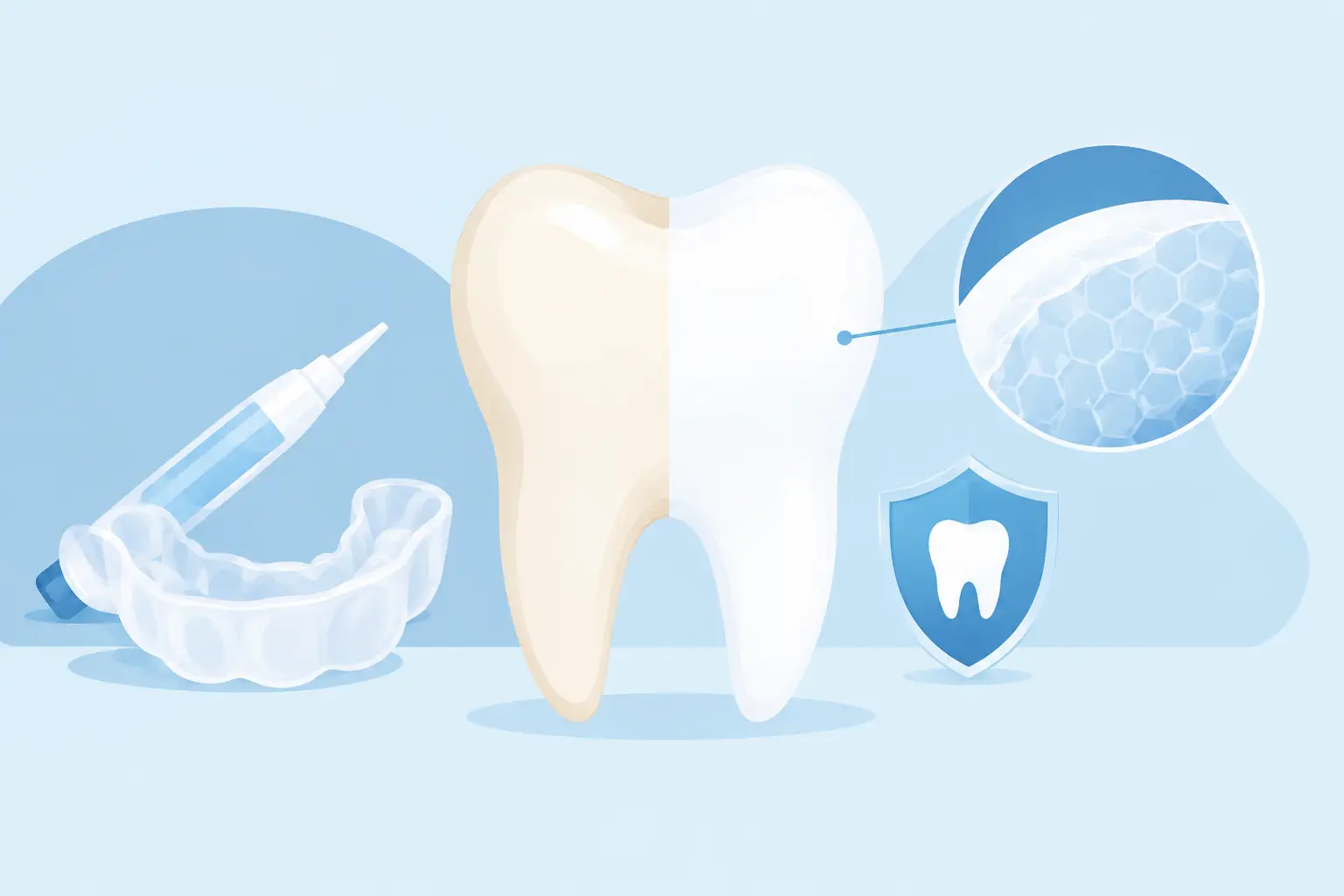
Professional whitening products typically use hydrogen peroxide or carbamide peroxide. These ingredients break down stains within the tooth, particularly stains caused by coffee, tea, tobacco, certain foods, and natural aging. They do not work by filing, sanding, or stripping away the outer enamel layer.
Research and clinical experience support the safety of professionally supervised whitening for suitable patients. A carefully selected whitening system, used for the recommended time and frequency, can brighten the teeth without causing permanent enamel loss. The key words are carefully selected and recommended. Whitening is cosmetic treatment, but it still deserves a clinical assessment.
Enamel is the hard, protective outer surface of the tooth. It cannot grow back once it has been lost through erosion, decay, grinding, or aggressive abrasion. That is why a responsible whitening plan begins with checking for issues that may affect safety, including cavities, leaking fillings, exposed roots, gum inflammation, cracks, and existing sensitivity.
Why Teeth Can Feel Sensitive After Whitening
Sensitivity is the side effect most commonly associated with teeth whitening, and it is easy to mistake it for enamel damage. These are not the same thing.
Whitening gel can temporarily make the tooth’s inner nerve more responsive, especially when peroxide moves through microscopic pathways in enamel and dentin. You may notice a short, sharp sensation with cold drinks, air, or sweet foods. Some people describe occasional “zingers” in a tooth during or soon after treatment.
For most patients, this sensitivity is mild and settles within a day or two after whitening stops. It does not automatically mean the enamel has been harmed. However, severe, persistent, or localized pain should never be ignored. It may point to a cavity, cracked tooth, gum recession, or another issue that needs a dentist’s attention.
Your dentist may reduce sensitivity by adjusting the gel strength, shortening the wearing time, spacing sessions farther apart, or recommending a desensitizing toothpaste. A custom tray can also help keep whitening gel where it belongs, on the teeth rather than the gums.
Whitening Can Cause Temporary Dehydration
Right after whitening, teeth can look especially bright because they are temporarily dehydrated. As the teeth rehydrate over the next few days, the color settles into its more stable final shade. This is normal and does not mean enamel has been removed.
Temporary dehydration may also make teeth feel a little more sensitive. Giving your teeth a break between sessions and following the instructions for your specific product helps minimize this effect.
When Whitening May Not Be the Right First Step
Not every discoloration should be treated with whitening gel right away. A dental exam is particularly valuable if you have tooth pain, bleeding gums, visible holes, broken teeth, significant sensitivity, or darkening in a single tooth. Whitening a tooth with an untreated problem can cause avoidable discomfort and delay the care you actually need.
Whitening also will not change the color of crowns, veneers, fillings, bonding, or implants. If a front crown or filling no longer matches your natural teeth, whitening the surrounding teeth may make that difference more noticeable. Your dentist can help plan the order of treatment so any cosmetic restoration is matched after your natural teeth have reached their desired shade.
People with gum recession need extra care because exposed root surfaces do not respond to whitening in the same way as enamel-covered teeth and can be more sensitive. Patients who are pregnant or breastfeeding should discuss the timing of elective whitening with their healthcare and dental professionals. Children and teens should be assessed individually rather than using adult whitening products without guidance.
Professional Whitening vs. Store-Bought Products
Store-bought strips, pens, trays, and whitening toothpastes can help some people with mild surface staining. They are convenient, and when used exactly as directed, many are safe for healthy adults. However, they are not a substitute for an exam, particularly if you are prone to sensitivity or have had dental work.
Over-the-counter trays are made to fit many mouths, not your mouth. A poor fit can let gel contact the gums, causing temporary irritation or whitening of the gum tissue. It can also deliver uneven results. Whitening toothpaste may remove some external stains through gentle polishing, but it will not significantly alter the internal shade of the tooth. Abrasive toothpaste used too aggressively can contribute to surface wear over time, so more scrubbing is not better.
Professional treatment offers stronger control. Your dentist can confirm that whitening is appropriate, identify restorations that will not lighten, protect the gums, and tailor the concentration and treatment schedule to your comfort. For patients who want more gradual results, take-home custom trays may be preferable. For those seeking a faster improvement for a special occasion, an in-office option may be suitable. The best choice depends on your starting shade, dental history, timeline, and sensitivity level.
Habits That Protect Enamel While You Whiten
The safest whitening routine is usually the least aggressive one that gets you the result you want. Avoid the temptation to add extra sessions because your teeth are not as white as an edited social media photo. Natural teeth vary in shade, and a healthy, believable brightness often looks better than an unnaturally opaque white.
During whitening, use a soft-bristled toothbrush and a fluoride toothpaste. Brush gently with small circular motions rather than pressing hard at the gumline. If cold foods trigger sensitivity, use a sensitivity toothpaste consistently rather than only on the day of treatment.
It also helps to limit deeply colored foods and drinks while you are whitening and for the first 24 to 48 hours after treatment. Coffee, tea, red wine, dark sodas, berries, tomato sauces, and tobacco can stain more easily during this period. Drinking water after coffee or tea and maintaining regular cleanings can help preserve results without repeated whitening.
Do not use acidic DIY methods such as lemon juice, vinegar, or charcoal powders to whiten your teeth. Acid can soften enamel, while harsh abrasives can wear the surface down. These approaches may create the appearance of a cleaner surface in the short term, but they do not offer the controlled, predictable results of clinically recommended whitening.
How Often Is It Safe to Whiten?
There is no single schedule that suits everyone. The right frequency depends on the whitening method, the concentration of the gel, your diet and habits, your natural tooth color, and how your teeth respond. Some patients benefit from a short course followed by occasional touch-ups, while others can maintain their result for much longer with good home care.
If sensitivity develops, pause treatment rather than pushing through it. If whitening no longer seems to work as expected, do not keep increasing the amount or frequency on your own. A dental professional can determine whether the issue is surface staining, a restoration mismatch, enamel wear, or a different type of discoloration that needs another cosmetic solution.
A Brighter Smile Should Still Feel Healthy
The safest whitening result is not simply the whitest shade possible. It is a smile that looks refreshed, feels comfortable, and remains supported by healthy enamel and gums. A professional consultation gives you a clear answer about whether whitening suits your teeth now and which method can deliver the result you want with confidence.
If you are considering whitening but have sensitivity, existing dental work, or concerns about enamel, let that question be the reason to book an exam – not a reason to give up on the smile you want.
Need Help?
Schedule your initial consultation today and start your journey towards a pain-free, healthier smile. Contact us now!
(function() {
// Global page view and session tracking for UAEL Modal Popup feature
try {
// Session tracking: increment if this is a new session
// Check if any popup on this page uses current page tracking
var hasCurrentPageTracking = false;
var currentPagePopups = [];
// Check all modal popups on this page for current page tracking
if (typeof jQuery !== 'undefined') {
jQuery('.uael-modal-parent-wrapper').each(function() {
var scope = jQuery(this).data('page-views-scope');
var enabled = jQuery(this).data('page-views-enabled');
var popupId = jQuery(this).attr('id').replace('-overlay', '');
if (enabled === 'yes' && scope === 'current') {
hasCurrentPageTracking = true;
currentPagePopups.push(popupId);
}
});
}
// Global tracking: ALWAYS increment if ANY popup on the site uses global tracking
// Current page tracking: increment per-page counters
if (hasCurrentPageTracking && currentPagePopups.length > 0) {
var currentUrl = window.location.href;
var urlKey = 'uael_page_views_' + btoa(currentUrl).replace(/[^a-zA-Z0-9]/g, '').substring(0, 50);
var currentPageViews = parseInt(localStorage.getItem(urlKey) || '0');
currentPageViews++;
localStorage.setItem(urlKey, currentPageViews.toString());
// Store URL mapping for each popup
for (var i = 0; i < currentPagePopups.length; i++) {
var popupUrlKey = 'uael_popup_' + currentPagePopups[i] + '_url_key';
localStorage.setItem(popupUrlKey, urlKey);
}
}
} catch (e) {
// Silently fail if localStorage is not available
}
})();
var uael_particles_script = {"uael_particles_url":"https://brightsmileshj.com/wp-content/plugins/ultimate-elementor/assets/min-js/uael-particles.min.js","particles_url":"https://brightsmileshj.com/wp-content/plugins/ultimate-elementor/assets/lib/particles/particles.min.js","snowflakes_image":"https://brightsmileshj.com/wp-content/plugins/ultimate-elementor/assets/img/snowflake.svg","gift":"https://brightsmileshj.com/wp-content/plugins/ultimate-elementor/assets/img/gift.png","tree":"https://brightsmileshj.com/wp-content/plugins/ultimate-elementor/assets/img/tree.png","skull":"https://brightsmileshj.com/wp-content/plugins/ultimate-elementor/assets/img/skull.png","ghost":"https://brightsmileshj.com/wp-content/plugins/ultimate-elementor/assets/img/ghost.png","moon":"https://brightsmileshj.com/wp-content/plugins/ultimate-elementor/assets/img/moon.png","bat":"https://brightsmileshj.com/wp-content/plugins/ultimate-elementor/assets/img/bat.png","pumpkin":"https://brightsmileshj.com/wp-content/plugins/ultimate-elementor/assets/img/pumpkin.png"};
var EAELImageMaskingConfig = {"svg_dir_url":"https://brightsmileshj.com/wp-content/plugins/essential-addons-for-elementor-lite/assets/front-end/img/image-masking/svg-shapes/"};
//# sourceURL=elementor-frontend-js-extra
var elementorFrontendConfig = {"environmentMode":{"edit":false,"wpPreview":false,"isScriptDebug":false},"i18n":{"shareOnFacebook":"Share on Facebook","shareOnTwitter":"Share on Twitter","pinIt":"Pin it","download":"Download","downloadImage":"Download image","fullscreen":"Fullscreen","zoom":"Zoom","share":"Share","playVideo":"Play Video","previous":"Previous","next":"Next","close":"Close","a11yCarouselPrevSlideMessage":"Previous slide","a11yCarouselNextSlideMessage":"Next slide","a11yCarouselFirstSlideMessage":"This is the first slide","a11yCarouselLastSlideMessage":"This is the last slide","a11yCarouselPaginationBulletMessage":"Go to slide"},"is_rtl":false,"breakpoints":{"xs":0,"sm":480,"md":768,"lg":1025,"xl":1440,"xxl":1600},"responsive":{"breakpoints":{"mobile":{"label":"Mobile Portrait","value":767,"default_value":767,"direction":"max","is_enabled":true},"mobile_extra":{"label":"Mobile Landscape","value":880,"default_value":880,"direction":"max","is_enabled":false},"tablet":{"label":"Tablet Portrait","value":1024,"default_value":1024,"direction":"max","is_enabled":true},"tablet_extra":{"label":"Tablet Landscape","value":1200,"default_value":1200,"direction":"max","is_enabled":false},"laptop":{"label":"Laptop","value":1366,"default_value":1366,"direction":"max","is_enabled":false},"widescreen":{"label":"Widescreen","value":2400,"default_value":2400,"direction":"min","is_enabled":false}},"hasCustomBreakpoints":false},"version":"4.1.1","is_static":false,"experimentalFeatures":{"e_font_icon_svg":true,"additional_custom_breakpoints":true,"container":true,"theme_builder_v2":true,"hello-theme-header-footer":true,"nested-elements":true,"global_classes_should_enforce_capabilities":true,"e_variables":true,"e_opt_in_v4_page":true,"e_components":true,"e_interactions":true,"e_widget_creation":true,"import-export-customization":true,"e_pro_variables":true},"urls":{"assets":"https:\/\/brightsmileshj.com\/wp-content\/plugins\/elementor\/assets\/","ajaxurl":"https:\/\/brightsmileshj.com\/wp-admin\/admin-ajax.php","uploadUrl":"https:\/\/brightsmileshj.com\/wp-content\/uploads"},"nonces":{"floatingButtonsClickTracking":"ff4fc2bc4b","atomicFormsSendForm":"7342e4a6b0"},"swiperClass":"swiper","settings":{"page":[],"editorPreferences":[]},"kit":{"active_breakpoints":["viewport_mobile","viewport_tablet"],"global_image_lightbox":"yes","lightbox_enable_counter":"yes","lightbox_enable_fullscreen":"yes","lightbox_enable_zoom":"yes","lightbox_enable_share":"yes","lightbox_title_src":"title","lightbox_description_src":"description"},"post":{"id":2558,"title":"Does%20Whitening%20Damage%20Enamel%3F%20The%20Honest%20Answer%20-%20Bright%20Smile%20Medical%20Center%20%7C%20Dental%20Clinic%20In%20Sharjah","excerpt":"Does whitening damage enamel? Learn what professional and at-home treatments do, why sensitivity happens, and how a dentist helps protect your smile safely","featuredImage":"https:\/\/brightsmileshj.com\/wp-content\/uploads\/2026\/11\/does-whitening-damage-enamel-the-honest-answer-featured-1024x683.webp"}};
//# sourceURL=elementor-frontend-js-before