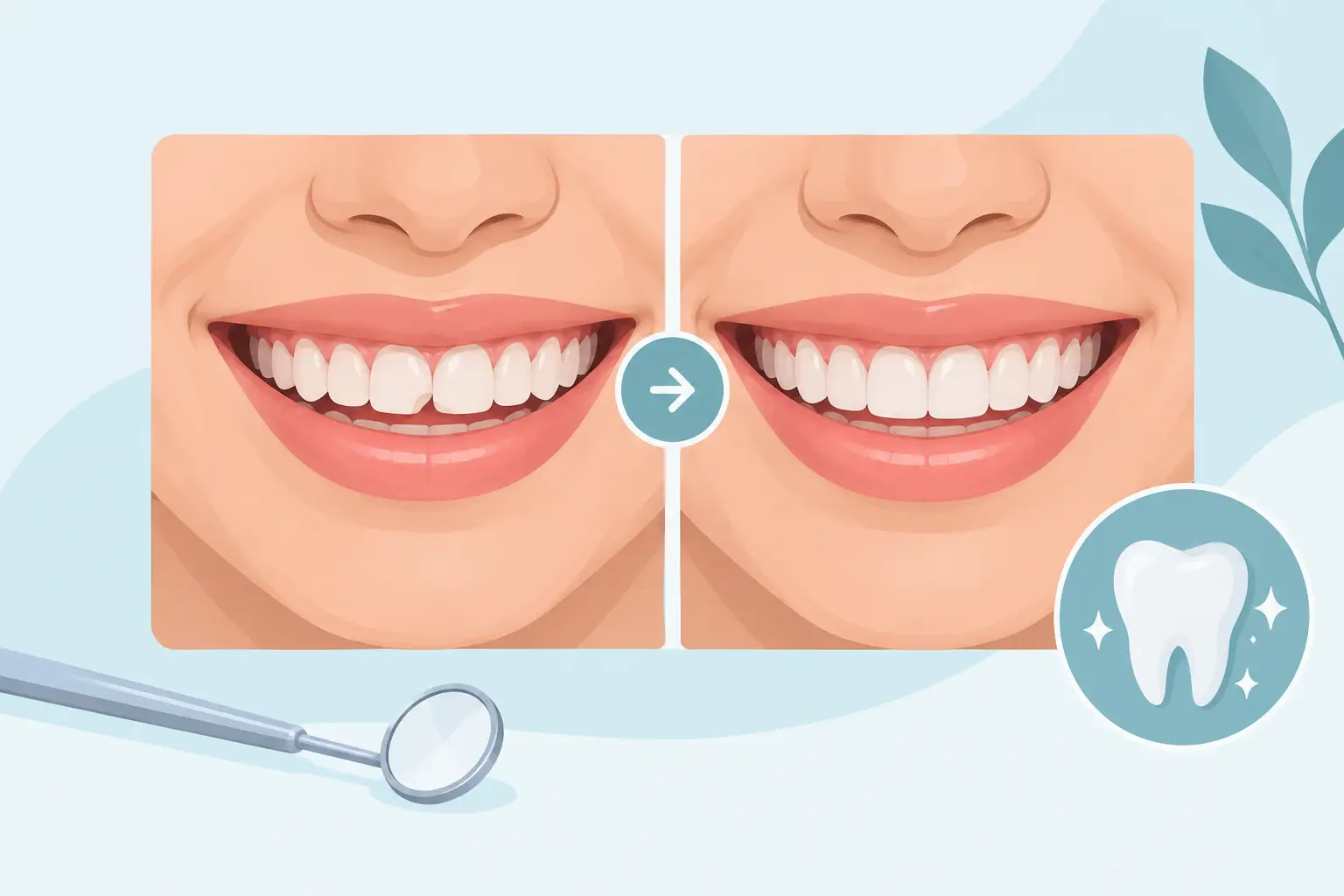
A small chip on a front tooth can draw your attention every time you smile, even when no one else notices it. The most compelling dental bonding before after changes are often not dramatic in a flashy way. They are refined: a smoother edge, a closed space, a more even tooth shape, and a smile that looks naturally like yours.
Dental bonding is a conservative cosmetic treatment that uses tooth-colored composite resin to improve the appearance of one or more teeth. It can be completed quickly in many cases, with little to no removal of natural enamel. For adults who want a visible improvement without committing to veneers or crowns, it can be an excellent option when planned carefully.
What Changes in Dental Bonding Before After Photos?
A good before-and-after result should not look artificial. The goal is to correct the feature that bothers you while respecting your natural tooth color, proportions, bite, and facial appearance. Composite resin is carefully layered, shaped, hardened with a curing light, and polished so it blends with the surrounding enamel.
Bonding is commonly used to repair a chipped or worn edge, build up a tooth that appears shorter than its neighbor, soften a pointed canine, close a small gap, or cover minor discoloration that whitening cannot fully improve. It may also make a slightly uneven smile line appear more balanced.
The “after” result depends as much on diagnosis as on the material. For example, closing a small gap can look beautiful when the teeth are proportioned correctly. If the gap is larger, simply adding resin to both teeth may make them look too wide. In that situation, orthodontic treatment or clear aligners may be the more natural route before cosmetic finishing.
The details patients tend to notice most
In a well-planned result, the bonded tooth should match the neighboring teeth in color and reflect light similarly. Its edge should feel smooth against the tongue, and its shape should fit your smile rather than look overly square, bulky, or bright.
Dentists also assess how your upper and lower teeth meet. A bonded edge that repeatedly hits an opposing tooth can chip sooner than expected. This is why a close-up photo alone cannot tell the full story. Your bite, enamel condition, gum health, and habits all influence what will last.
What Happens During the Appointment?
For a straightforward repair or small cosmetic enhancement, dental bonding is often completed in one visit. The dentist first examines the tooth and discusses the change you would like to see. Photos or a shade guide may be used to select a resin color that works with your natural enamel.
The tooth surface is prepared gently so the bonding material can adhere securely. The dentist applies composite resin in small layers, shaping it to recreate a natural contour. Each layer is hardened, then the tooth is refined, checked in your bite, and polished.
Anesthetic is not always needed because bonding usually involves minimal drilling. It may be recommended if there is decay to remove, if a deeper repair is required, or if you are sensitive. Patients who feel nervous about dental treatment should say so before the appointment. A comfortable pace, clear explanation, and gentle care can make a cosmetic visit feel much easier.
Is Dental Bonding Right for Your Smile?
Bonding works best for relatively small to moderate cosmetic concerns in otherwise healthy teeth. It is particularly useful when preserving natural tooth structure is a priority and you want to see a change quickly.
It may be a good fit if you have a minor chip, narrow gap, uneven tooth edge, small worn area, or localized staining. It can also be a sensible first cosmetic step for patients who are not ready for a more extensive treatment.
However, dental bonding is not the ideal answer for every concern. Large fractures, heavily decayed teeth, major bite problems, and extensive discoloration may need another solution. A crown may better protect a weak tooth. Veneers may offer greater stain resistance and longer-term color stability for a broader smile makeover. Orthodontics may be recommended when spacing or crowding is the underlying issue.
Teeth grinding is another important consideration. Composite resin can be durable, but regular grinding or clenching places significant pressure on bonded edges. A custom night guard can help protect both your natural teeth and cosmetic work. Being honest about these habits allows the dentist to recommend a treatment plan that is realistic, not simply attractive on the day it is completed.
How Long Do Dental Bonding Results Last?
With proper care, dental bonding can last several years. The exact lifespan varies. A small repair in a protected area may remain in great condition for a long time, while bonding on a biting edge may require earlier polishing, repair, or replacement.
Composite resin does not respond to whitening treatment in the same way natural enamel does. If you are considering whitening, it is often best to whiten first and choose the bonding shade afterward. That approach helps the final restoration blend with your preferred tooth color. If you whiten after bonding, the surrounding teeth may become lighter while the resin stays the same shade.
The material can also gradually pick up surface stains from coffee, tea, tobacco, and deeply colored foods. Regular professional cleaning and careful polishing help maintain its appearance. If the surface becomes dull or lightly stained, it can sometimes be refreshed without replacing all of the bonding.
Everyday habits that protect bonded teeth
Treat bonded teeth much like healthy natural teeth, with a little extra awareness. Brush twice daily using a soft toothbrush and non-abrasive toothpaste, floss every day, and attend regular dental checkups. Avoid using your teeth to open packages, tear tags, or bite hard objects such as ice and pen caps.
If you enjoy coffee or tea, you do not need to give it up. Rinsing with water afterward and keeping up with hygiene can reduce surface staining. Most importantly, contact your dentist promptly if you notice roughness, a sharp edge, a change in your bite, or a chip. Small adjustments are usually easier than waiting for a larger problem.
Bonding, Veneers, and Crowns: The Practical Difference
Dental bonding usually involves the least alteration to the natural tooth. It is often more affordable at the outset, can be completed quickly, and is easier to repair if a small chip occurs. Its trade-off is that composite may stain or wear sooner than porcelain.
Veneers are thin porcelain shells designed to improve the visible front surface of teeth. They can create a more consistent color and shape across multiple teeth and are generally more resistant to staining. They usually require more planning and some enamel preparation, so they are better suited to patients seeking a more comprehensive, long-lasting cosmetic change.
Crowns cover the full tooth and are primarily used when strength and protection are needed, not simply for a small cosmetic adjustment. The best choice is not automatically the most extensive treatment. It is the option that addresses your concern while protecting your oral health and preserving healthy tooth structure where possible.
What to Ask Before You Decide
Before proceeding, ask what result is realistic for your specific tooth, how the bonding will affect your bite, and whether your gums and enamel are healthy enough for cosmetic work. You should also ask whether whitening, aligners, or treatment for grinding should come first.
At Bright Smile Medical Center, a cosmetic consultation focuses on the details that make a result look believable and feel comfortable, not just better in a photograph. The right plan may be a simple one-tooth repair or part of a broader smile treatment.
A thoughtful dental bonding result should give you a reason to smile more freely, while still letting your smile look unmistakably your own.
Need Help?
Schedule your initial consultation today and start your journey towards a pain-free, healthier smile. Contact us now!
(function() {
// Global page view and session tracking for UAEL Modal Popup feature
try {
// Session tracking: increment if this is a new session
// Check if any popup on this page uses current page tracking
var hasCurrentPageTracking = false;
var currentPagePopups = [];
// Check all modal popups on this page for current page tracking
if (typeof jQuery !== 'undefined') {
jQuery('.uael-modal-parent-wrapper').each(function() {
var scope = jQuery(this).data('page-views-scope');
var enabled = jQuery(this).data('page-views-enabled');
var popupId = jQuery(this).attr('id').replace('-overlay', '');
if (enabled === 'yes' && scope === 'current') {
hasCurrentPageTracking = true;
currentPagePopups.push(popupId);
}
});
}
// Global tracking: ALWAYS increment if ANY popup on the site uses global tracking
// Current page tracking: increment per-page counters
if (hasCurrentPageTracking && currentPagePopups.length > 0) {
var currentUrl = window.location.href;
var urlKey = 'uael_page_views_' + btoa(currentUrl).replace(/[^a-zA-Z0-9]/g, '').substring(0, 50);
var currentPageViews = parseInt(localStorage.getItem(urlKey) || '0');
currentPageViews++;
localStorage.setItem(urlKey, currentPageViews.toString());
// Store URL mapping for each popup
for (var i = 0; i < currentPagePopups.length; i++) {
var popupUrlKey = 'uael_popup_' + currentPagePopups[i] + '_url_key';
localStorage.setItem(popupUrlKey, urlKey);
}
}
} catch (e) {
// Silently fail if localStorage is not available
}
})();
var uael_particles_script = {"uael_particles_url":"https://brightsmileshj.com/wp-content/plugins/ultimate-elementor/assets/min-js/uael-particles.min.js","particles_url":"https://brightsmileshj.com/wp-content/plugins/ultimate-elementor/assets/lib/particles/particles.min.js","snowflakes_image":"https://brightsmileshj.com/wp-content/plugins/ultimate-elementor/assets/img/snowflake.svg","gift":"https://brightsmileshj.com/wp-content/plugins/ultimate-elementor/assets/img/gift.png","tree":"https://brightsmileshj.com/wp-content/plugins/ultimate-elementor/assets/img/tree.png","skull":"https://brightsmileshj.com/wp-content/plugins/ultimate-elementor/assets/img/skull.png","ghost":"https://brightsmileshj.com/wp-content/plugins/ultimate-elementor/assets/img/ghost.png","moon":"https://brightsmileshj.com/wp-content/plugins/ultimate-elementor/assets/img/moon.png","bat":"https://brightsmileshj.com/wp-content/plugins/ultimate-elementor/assets/img/bat.png","pumpkin":"https://brightsmileshj.com/wp-content/plugins/ultimate-elementor/assets/img/pumpkin.png"};
var EAELImageMaskingConfig = {"svg_dir_url":"https://brightsmileshj.com/wp-content/plugins/essential-addons-for-elementor-lite/assets/front-end/img/image-masking/svg-shapes/"};
//# sourceURL=elementor-frontend-js-extra
var elementorFrontendConfig = {"environmentMode":{"edit":false,"wpPreview":false,"isScriptDebug":false},"i18n":{"shareOnFacebook":"Share on Facebook","shareOnTwitter":"Share on Twitter","pinIt":"Pin it","download":"Download","downloadImage":"Download image","fullscreen":"Fullscreen","zoom":"Zoom","share":"Share","playVideo":"Play Video","previous":"Previous","next":"Next","close":"Close","a11yCarouselPrevSlideMessage":"Previous slide","a11yCarouselNextSlideMessage":"Next slide","a11yCarouselFirstSlideMessage":"This is the first slide","a11yCarouselLastSlideMessage":"This is the last slide","a11yCarouselPaginationBulletMessage":"Go to slide"},"is_rtl":false,"breakpoints":{"xs":0,"sm":480,"md":768,"lg":1025,"xl":1440,"xxl":1600},"responsive":{"breakpoints":{"mobile":{"label":"Mobile Portrait","value":767,"default_value":767,"direction":"max","is_enabled":true},"mobile_extra":{"label":"Mobile Landscape","value":880,"default_value":880,"direction":"max","is_enabled":false},"tablet":{"label":"Tablet Portrait","value":1024,"default_value":1024,"direction":"max","is_enabled":true},"tablet_extra":{"label":"Tablet Landscape","value":1200,"default_value":1200,"direction":"max","is_enabled":false},"laptop":{"label":"Laptop","value":1366,"default_value":1366,"direction":"max","is_enabled":false},"widescreen":{"label":"Widescreen","value":2400,"default_value":2400,"direction":"min","is_enabled":false}},"hasCustomBreakpoints":false},"version":"4.1.1","is_static":false,"experimentalFeatures":{"e_font_icon_svg":true,"additional_custom_breakpoints":true,"container":true,"theme_builder_v2":true,"hello-theme-header-footer":true,"nested-elements":true,"global_classes_should_enforce_capabilities":true,"e_variables":true,"e_opt_in_v4_page":true,"e_components":true,"e_interactions":true,"e_widget_creation":true,"import-export-customization":true,"e_pro_variables":true},"urls":{"assets":"https:\/\/brightsmileshj.com\/wp-content\/plugins\/elementor\/assets\/","ajaxurl":"https:\/\/brightsmileshj.com\/wp-admin\/admin-ajax.php","uploadUrl":"https:\/\/brightsmileshj.com\/wp-content\/uploads"},"nonces":{"floatingButtonsClickTracking":"8bcd2b1eb8","atomicFormsSendForm":"9390ae9ea9"},"swiperClass":"swiper","settings":{"page":[],"editorPreferences":[]},"kit":{"active_breakpoints":["viewport_mobile","viewport_tablet"],"global_image_lightbox":"yes","lightbox_enable_counter":"yes","lightbox_enable_fullscreen":"yes","lightbox_enable_zoom":"yes","lightbox_enable_share":"yes","lightbox_title_src":"title","lightbox_description_src":"description"},"post":{"id":2441,"title":"Dental%20Bonding%20Before%20After%3A%20Real%20Results%20-%20Bright%20Smile%20Medical%20Center%20%7C%20Dental%20Clinic%20In%20Sharjah","excerpt":"Understand dental bonding before after results, including chips, gaps, color balance, appointment time, durability, care, and whether it suits you well.","featuredImage":"https:\/\/brightsmileshj.com\/wp-content\/uploads\/2026\/09\/dental-bonding-before-after-real-results-featured-1024x683.webp"}};
//# sourceURL=elementor-frontend-js-before